
Where India’s Battery Graphite Actually Starts
When people talk about India’s battery supply chain, the conversation usually begins with gigafactories, lithium-ion cells, electric vehicles and energy storage.
But the graphite inside a battery begins its journey much earlier.
For natural graphite, that journey starts at a graphite deposit, moves through mining and mineral beneficiation, and only then reaches the highly specialised processing required to turn graphite concentrate into battery anode material.
Understanding this distinction is important because producing graphite and producing battery-grade graphite are not the same thing. Battery graphite is the result of an entire value chain, and the quality established at the upstream stages can influence everything that follows.
Graphite’s Role Inside a Lithium-Ion Battery
A lithium-ion battery has four major components: the cathode, anode, electrolyte and separator.
Graphite is the dominant material used in the anode.
Its layered crystalline structure allows lithium ions to move into and out of the material during charging and discharging. But the graphite used for this purpose cannot simply be mined, crushed and sent to a battery manufacturer.
Natural graphite has to pass through several stages:
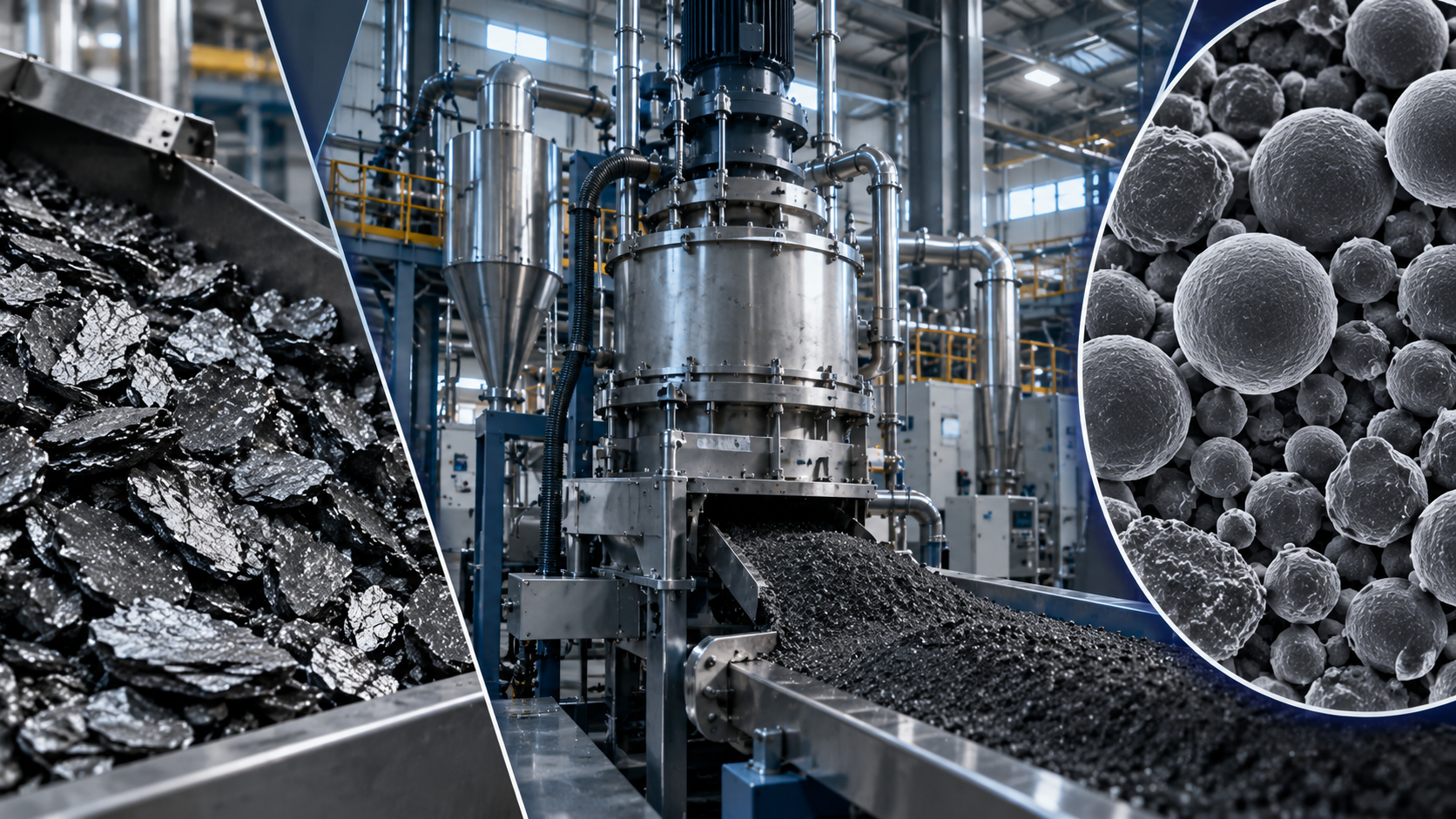
Mining → Beneficiation → Purification → Micronisation & Spheroidisation → Coating → Anode Material
Each stage solves a different problem.
And the first major challenge is separating graphite from the rock in which it naturally occurs.
Stage 1: It Starts With the Ore
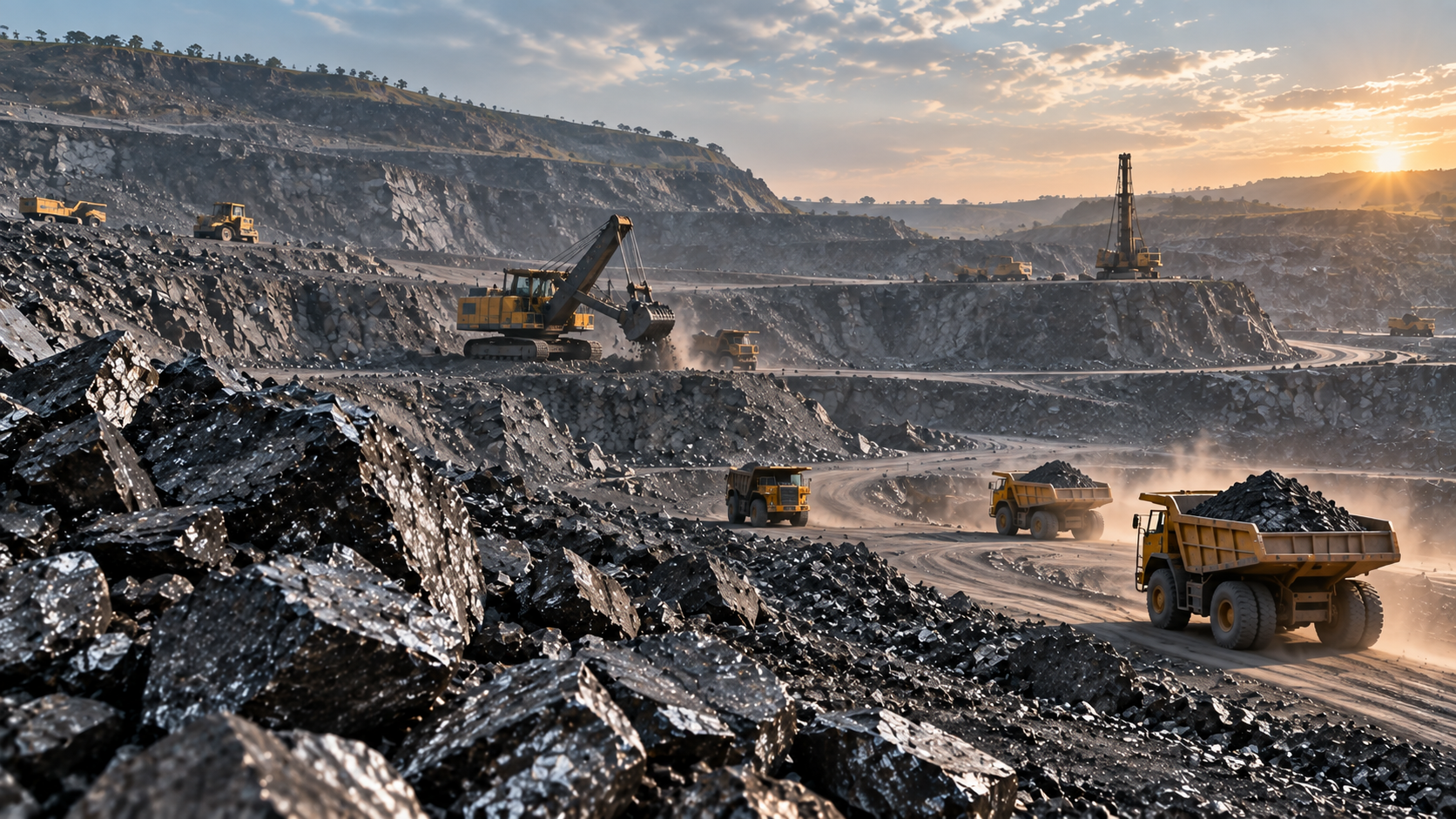
Natural graphite occurs within an ore body alongside other minerals and gangue.
A graphite ore containing, for example, 5–10% fixed carbon is very different from a graphite concentrate containing more than 95% fixed carbon. The objective of the first processing stages is therefore not simply to make the material smaller. It is to liberate the graphite and separate it from unwanted minerals while preserving the useful characteristics of the graphite itself.
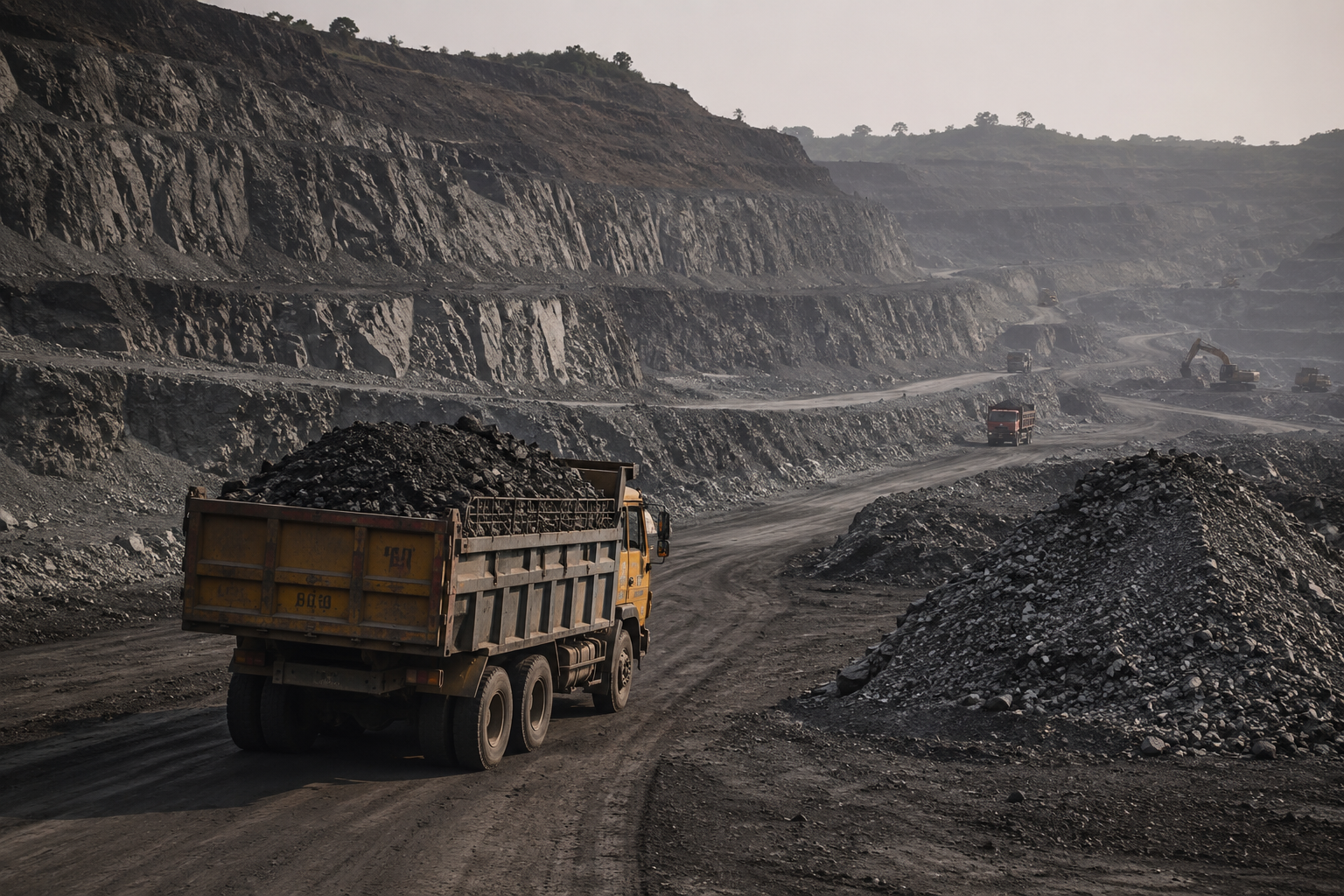
This begins at the mine.
Ore characteristics such as fixed carbon content, flake distribution, mineralogy and liberation behaviour can vary considerably between deposits — and sometimes even within different sections of the same deposit.
That is why geological understanding and mineral processing have to work together.
A graphite resource is ultimately valuable not only because graphite is present, but because that graphite can be recovered consistently and converted into products that downstream industries can use.
Stage 2: Beneficiation — Where the Real Separation Happens
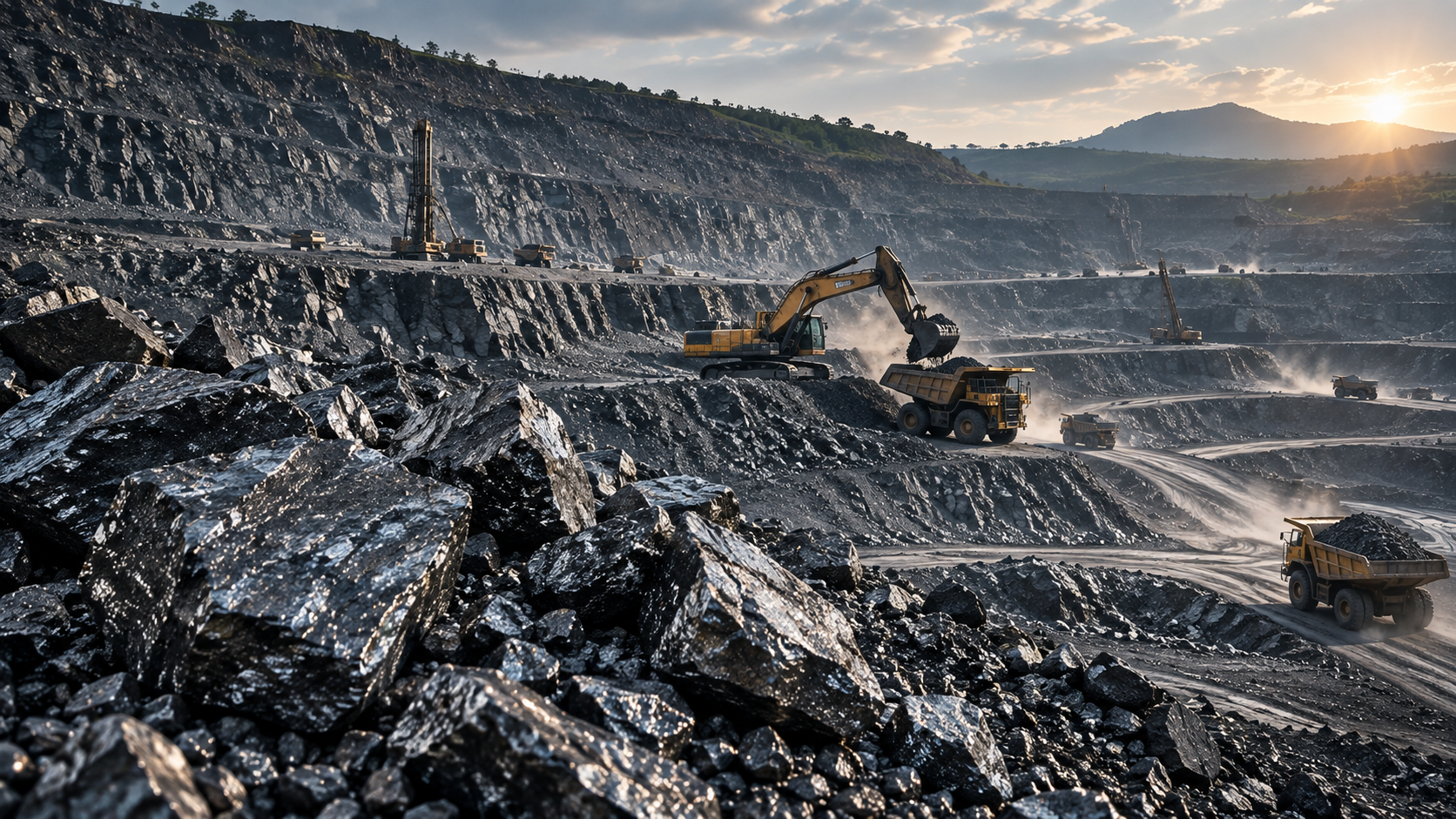
After mining, graphite ore is typically crushed and ground before entering the beneficiation circuit.
This sounds straightforward, but graphite processing requires a careful balance.
Grinding must liberate graphite from the surrounding gangue minerals. Excessive grinding, however, can unnecessarily damage or reduce the size of graphite flakes.
Once sufficient liberation has been achieved, flotation is commonly used to separate graphite from the other minerals.
Graphite is naturally hydrophobic. With the correct flotation conditions, graphite particles can attach to air bubbles and rise into the froth, while much of the unwanted mineral matter remains behind.
In an industrial beneficiation plant, this is generally not a single-step operation.
Material may move through rougher flotation, cleaning stages and regrinding circuits. At every stage, parameters such as particle size, reagent dosage, pulp conditions and residence time need to be controlled.
The objective is not merely to achieve a high fixed-carbon number.
A manufacturer also has to consider recovery, flake-size distribution, consistency and downstream suitability.
A 95%+ graphite concentrate is therefore the result of controlled mineral processing, not simply crushing higher-grade ore.
Stage 3: From Graphite Concentrate to Battery-Grade Graphite
This is where an important distinction needs to be made.
A high-quality natural graphite concentrate is still not finished battery anode material.
For lithium-ion battery applications, natural graphite normally requires substantially higher purity along with carefully controlled particle characteristics.
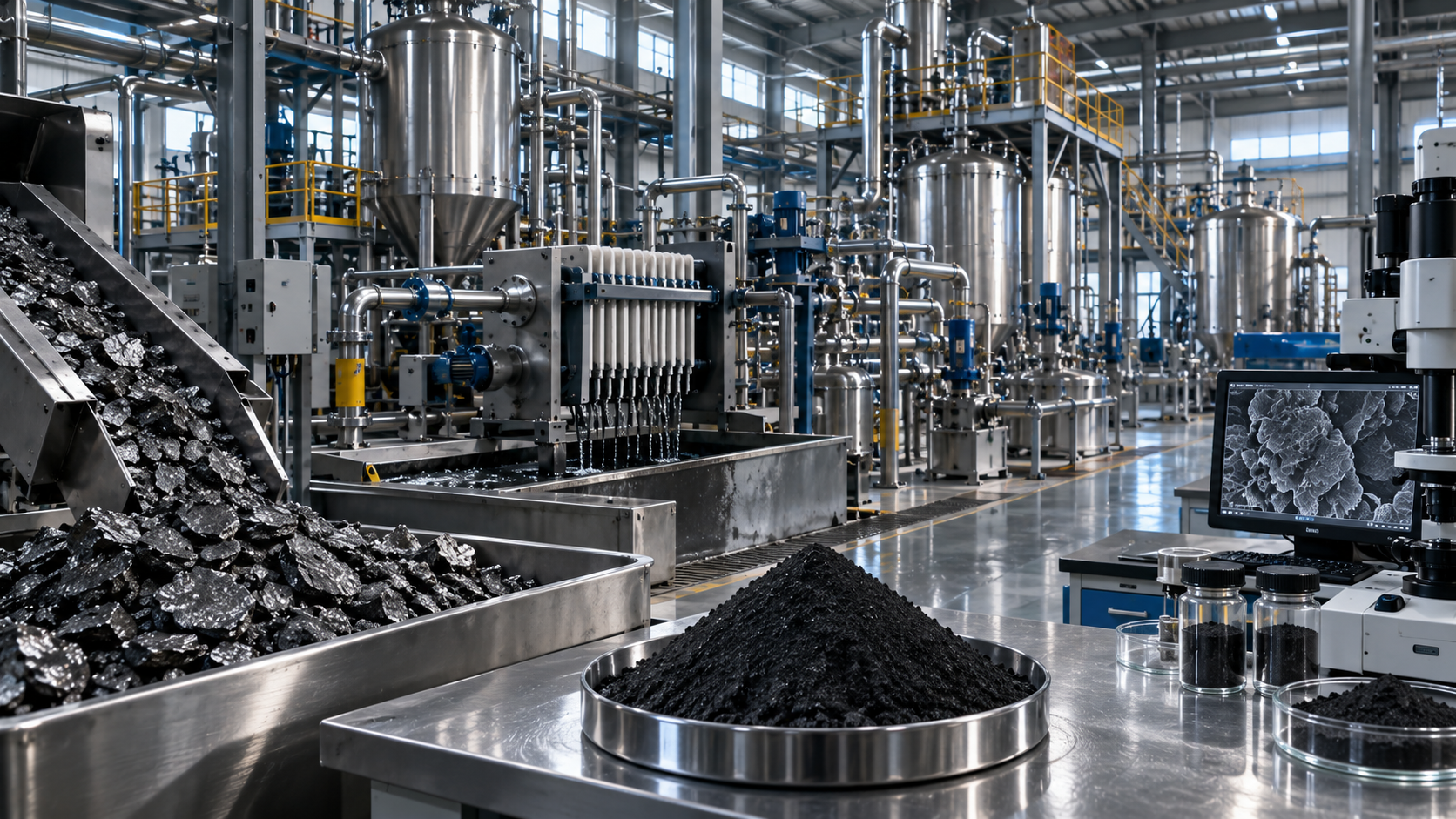
The concentrate is further processed through specialised steps that can include purification, micronisation, spheroidisation and surface coating.
Purification
Residual mineral impurities must be removed to reach the extremely high purity required for battery applications.
Depending on the process route, purification can involve chemical, thermal or combinations of different treatment methods. Battery-oriented natural graphite commonly targets carbon purity above 99.9%, with requirements often around 99.95% or higher.
But purity alone still does not make an anode material.
Micronisation and Spheroidisation
Natural flake graphite has a plate-like shape.
For battery applications, it is typically micronised and mechanically reshaped into rounded particles — often described as spherical or potato-shaped graphite.
Why change the shape?
Because particle morphology affects how graphite packs inside an electrode. Properly engineered spherical graphite can provide better packing density and more suitable characteristics for electrode manufacturing.
Particle-size distribution, tap density, surface area and morphology therefore become critical specifications alongside carbon purity.
Coating
Spherical purified graphite can then receive a carbon-based surface coating followed by heat treatment.
The coating helps control the interaction between the graphite surface and the battery electrolyte and contributes to the electrochemical performance and stability required from the finished anode material.
The resulting material is commonly known as coated spherical purified graphite, or CSPG.
Only after these stages does mined natural graphite become a highly engineered battery material.
Why India Needs to Look Further Upstream
India is investing heavily in electric mobility, battery manufacturing and energy storage.
But building battery factories is only one part of building a battery ecosystem.
Graphite has been recognised by India as a critical and strategic mineral, reflecting its importance to technologies including electric-vehicle batteries. India also continues to depend significantly on imported graphite requirements.
This makes the upstream and midstream portions of the value chain increasingly important.
If India wants a more resilient domestic battery-material ecosystem, the opportunity is not simply to import graphite concentrate and perform the final processing locally.
The longer-term opportunity is to develop capabilities across the chain:
Indian graphite resources → Domestic mining → Beneficiation → High-purity graphite → Spherical graphite → Anode material
Every additional stage developed domestically reduces the distance between India’s mineral resources and its advanced manufacturing industries.
Consistency Matters as Much as Purity
One lesson becomes clear when graphite is viewed from the manufacturer’s side: a laboratory result and an industrial product are two different things.
Producing one sample at a particular purity is relatively different from producing tonnes of material that repeatedly meet specifications.
Industrial customers require consistency.
That means controlling the ore feed, grinding conditions, flotation performance, reagent dosage, moisture, particle-size distribution and final product quality across production batches.
For battery applications, those expectations become even tighter.
The transition from conventional graphite products to advanced battery materials therefore depends not only on achieving higher purity, but on developing repeatable processes, quality-control systems and deeper knowledge of the mineral itself.
Building From the Mine Up
India’s battery graphite story should not begin at the battery cell.
It should begin with understanding the resource beneath the ground and building the processing capability above it.
At Dhanpriya Resources, our approach to natural graphite follows this upstream-to-downstream perspective. With graphite resources, beneficiation capabilities and continued in-house research and development, our focus is on understanding how Indian natural graphite can be processed consistently and progressively upgraded for higher-value applications.
The path from graphite ore to battery anode material is technically demanding, and every stage has its own challenges.
But that is precisely why developing domestic expertise matters.
Because before India can manufacture more battery graphite, it first needs to master where battery graphite actually starts.